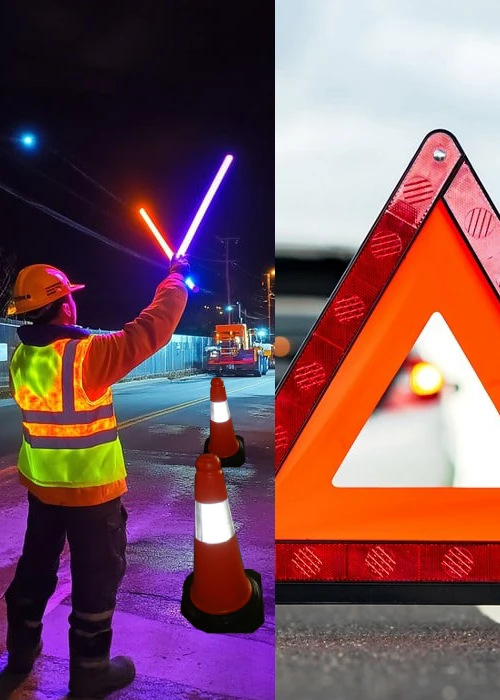
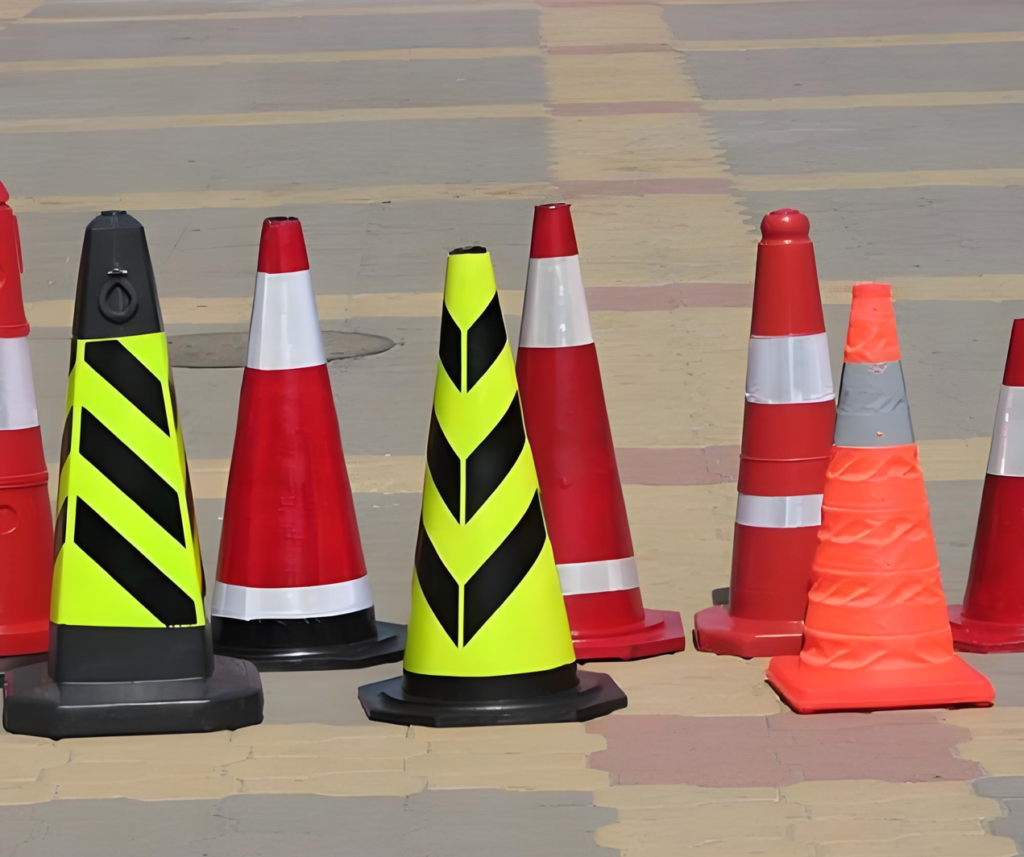
As an essential component in modern traffic management, reflective cones—also known as safety cones or traffic cones—play a critical role in temporarily delineating traffic flow, guiding vehicles safely around hazards, and securing both infrastructure and personnel in designated areas. Recognized for their high visibility, flexibility, durability, and adaptability across various environments, these devices offer clear and immediate warnings to all road users.
To fully leverage their protective functions and enhance personal and property safety, it is important to understand how to select, deploy, and maintain reflective cones effectively.
1. Selecting Safety Cones with Suitable Characteristics
The effectiveness of traffic safety cones largely depends on choosing appropriate specifications—such as size, color, and material—tailored to specific settings and scenarios. Typically conical or cylindrical in shape, road cones range from 30 to 100 cm in height. Their application influences not only dimensions but also color selection and the use of reflective elements.
1.1 Highways
On high-speed roadways, safety cones should be highly conspicuous and stable. Recommended heights range from 70 to 100 cm, with 80 cm being the most common. This size ensures visibility without being easily displaced by passing vehicles.
Fluorescent orange is the preferred color, supplemented with reflective strips at least 150 mm wide to enhance detection both day and night, alerting drivers well in advance to construction or hazard zones.
1.2 Urban Roads and Access Points
For city streets, intersections, and entrances to schools, hotels, or large facilities, reflective cones between 45 and 70 cm in height are suitable for temporary traffic management.
Surface parking lots are best served with 45 cm fluorescent red cones, while indoor or underground parking areas should use 45 cm yellow cones for clear contrast under artificial lighting.
1.3 Public Venues
Compact settings such as school grounds, sports facilities, or pedestrian zones benefit from 30–45 cm blue safety cones. Their smaller size allows for flexible placement in areas with lower vehicle speeds or foot traffic.
2. Strategic Placement in Compliance with Guidelines
Proper installation of safety cones is vital to meet regulatory standards and maximize their warning function. Placement should follow official protocols based on road type, operational context, and environmental conditions.
2.1 Adherence to Spacing Regulations
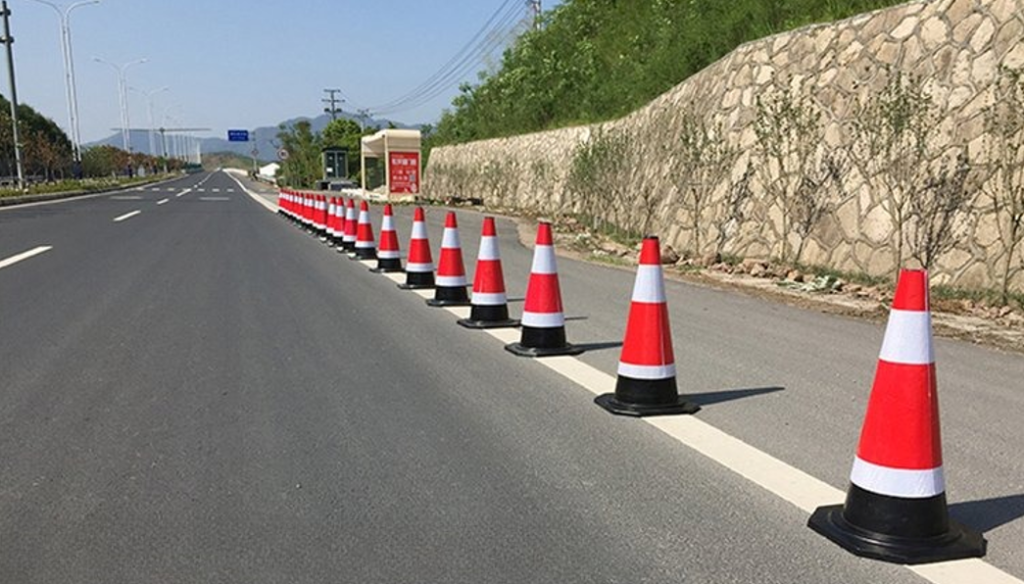
- Temporary Work or Parking on Urban Roads: A warning zone consisting of reflective cones extending at least 50 meters upstream from the activity site is generally required. Cone spacing is typically 10–20 meters. In high-traffic or low-visibility conditions, this warning zone should extend beyond 100 meters.
- Highway Operations: On roads with a 120 km/h speed limit, the warning area should be no less than 1600 meters, with reflective cones spaced consistently at 5–15 meters throughout transition zones.
- Accident Sites: On urban roads, begin placement 50–100 meters from the incident. On highways, increase this distance to approximately 150 meters, tapering the arrangement toward the scene to create a protected area. After incident clearance, maintain cones for another 50–100 meters to guide traffic smoothly back to normal flow.
2.2 Effective Configuration
Cones should be arranged in a straight line along lane edges or in a triangular pattern around obstacles, with the apex facing incoming traffic.
On curves, follow the inner edge of the road and adjust spacing to 5–10 meters based on curvature to maintain a continuous visual guide.
2.3 Safety During Deployment
Individuals installing cones should wear high-visibility reflective vests and complete the task swiftly. In complex scenarios, poor weather, or nighttime conditions, increase the number of cones and extend warning distances to enhance safety.
3. Ensuring Quality and Consistent Maintenance
Traffic cones are manufactured from materials such as PVC, PE, rubber, PU, or metal, each offering distinct advantages:
- Plastic Cones (PVC / PE): Lightweight, weather-resistant, and impact-tolerant
- Rubber Cones: Durable and resilient, capable of regaining shape after impact
- Metal Cones: Suitable for applications requiring maximum stability and long-term durability
Selection should account for road type, traffic density, and environmental exposure. Regular inspections are necessary to ensure cones remain upright, properly positioned, and free from damage. Prompt adjustment or replacement ensures sustained visibility and performance.
4. Enhanced Solutions from Bestway
Bestway offers a range of robust reflective safety cones designed for reliability and ease of use. Manufactured from durable PE with rubber bases, they withstand impacts, UV exposure, and harsh weather conditions.
- Reflective tape for enhanced night visibility
- Heavy rubber bases for stability in high-traffic or windy environments
- Collapsible cone options for easy storage and rapid deployment
- Multiple sizes available (500 mm, 750 mm, 900 mm) for diverse applications
In addition, Bestway supplies complementary road safety products such as reflective safety vests, warning tapes, barriers, flashing warning lights, and emergency warning triangles. By integrating these tools, users can establish a comprehensive traffic safety system through a one-stop procurement solution.